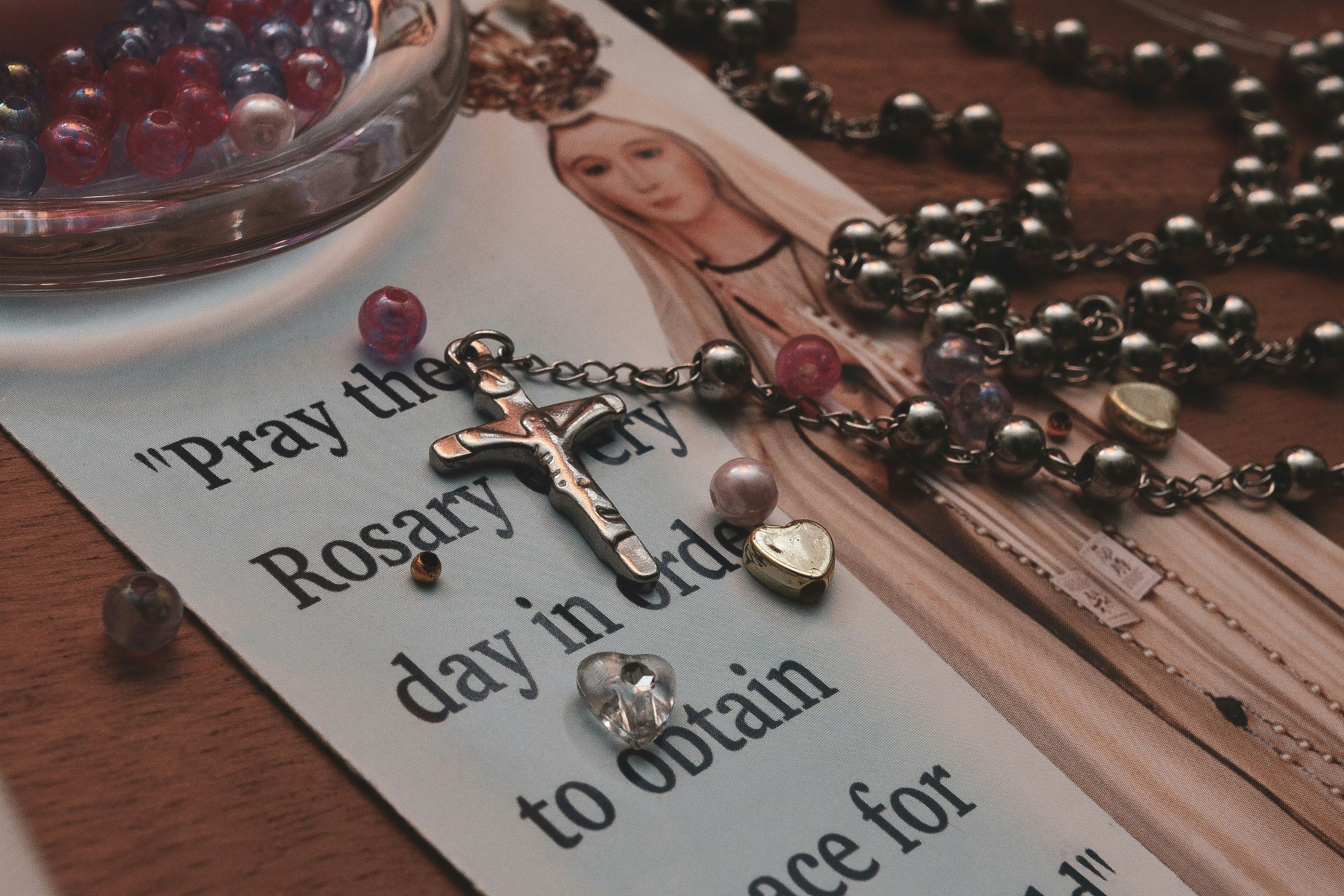
The Rosary is one of the most popular devotions of the Catholic faith. Even non-Catholics often recognize that it’s a Marian prayer that is prayed with a set of beads. But many people don’t know where it came from or what the prayer consists of (beyond a bunch of Hail Marys).
In this article, we’ll explore:
By the end, we hope you’ll better understand this beloved Catholic devotion—and be inspired to pray along with CatholicTV.
If you’re new to the Rosary, you may be wondering what it is and where it came from. Even if you’re already familiar with this ancient devotion, you can refresh your knowledge of its rich and interesting history.
The Rosary is traditionally attributed to an apparition St. Dominic received from Our Lady in the early thirteenth century, but other sources indicate that parts of the Rosary predate Dominic’s lifetime.
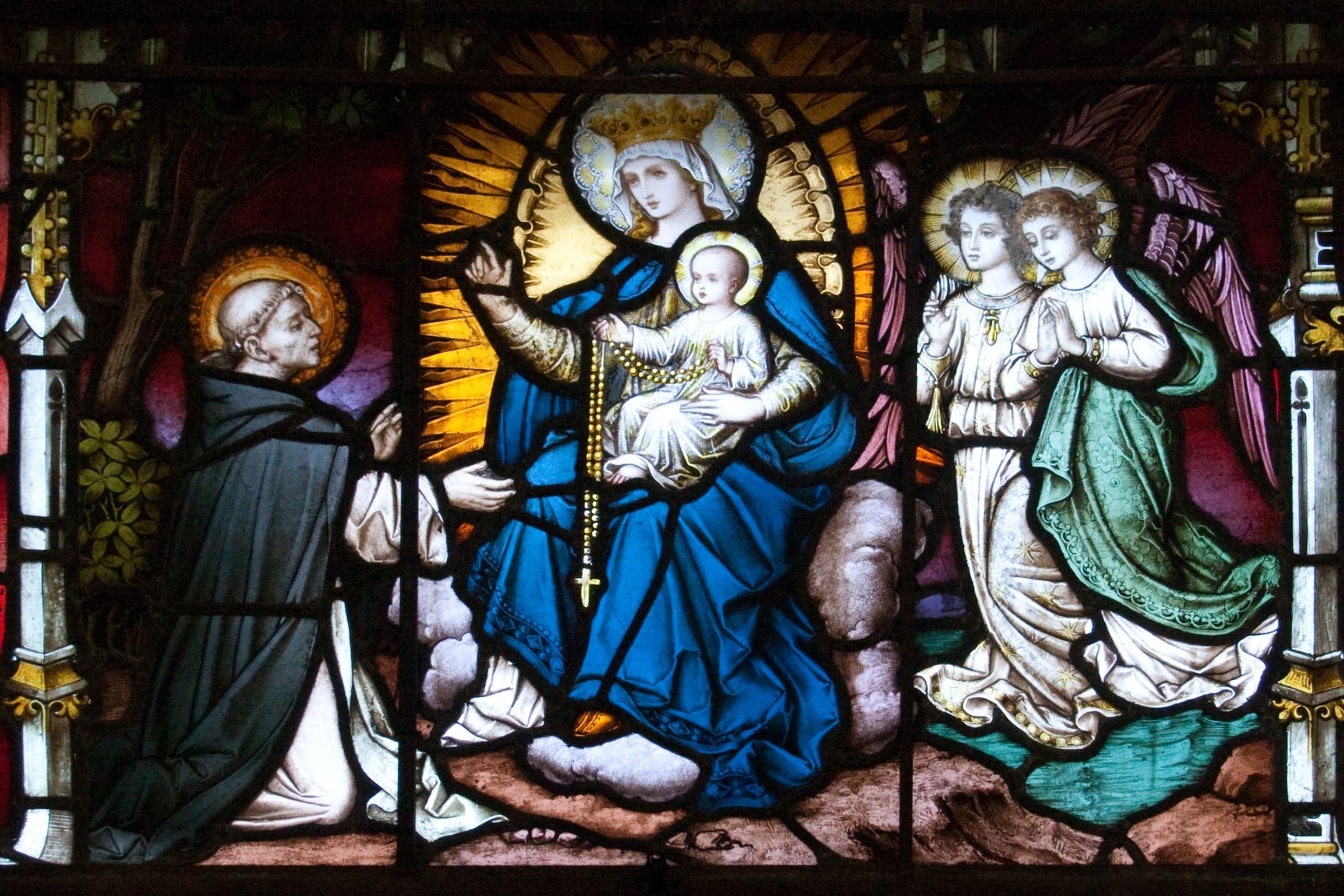
During the medieval period, monks would recite all 150 Psalms on a daily basis. But for the laity, this would have been impossible, as most didn’t own a Psalter (and, with the rate of illiteracy, many wouldn’t be able to read it if they did). The Our Father served as an easy-to-remember alternative to the Psalms, divided into fifteen sets of ten, or “decades,” matching the 150 prayers of the Psalter. Eventually, the Hail Mary replaced the Our Father, which was placed between decades.
It wasn’t until the sixteenth century that the Glory Be was added to the end of each decade and mysteries from the life of Jesus and Mary were included as meditations: Joyful, Sorrowful, and Glorious. More than four centuries later, Pope St. John Paul II would introduce the Luminous mysteries.
Today, the Rosary is prayed every day by millions of Catholics around the world, and many conversions, miracles, and answers to prayer have been attributed to it. If you haven’t practiced this beloved devotion yet, try it and see what graces Our Lady has in store for you!
Ready to pray? Visit our guide to praying the Rosary with CatholicTV.
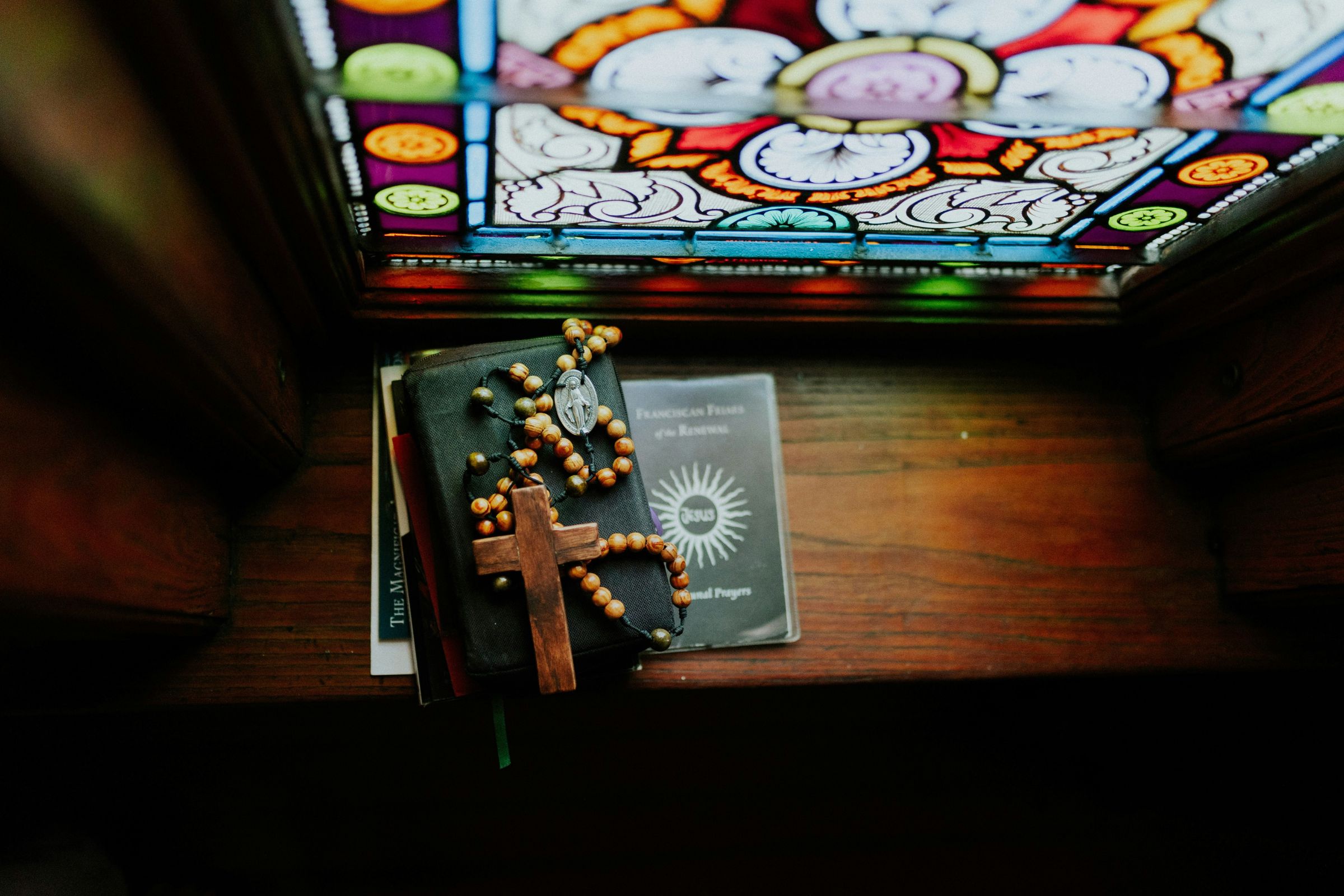
Each decade of the Rosary is a meditation on a different mystery. But what do we mean by “mysteries” of the faith? These are the truths of the faith that, while divinely revealed to us by God, cannot be fully grasped with our human understanding.
However, it is spiritually fruitful to meditate on the mysteries of our faith, even if we cannot attain full knowledge of them with our finite minds.
The mysteries of the Rosary are grouped in sets of five, organized by theme: Joyful, Sorrowful, Glorious, and Luminous.
The Church prays a different set of mysteries per day of the week:
But why specific mysteries on certain days?
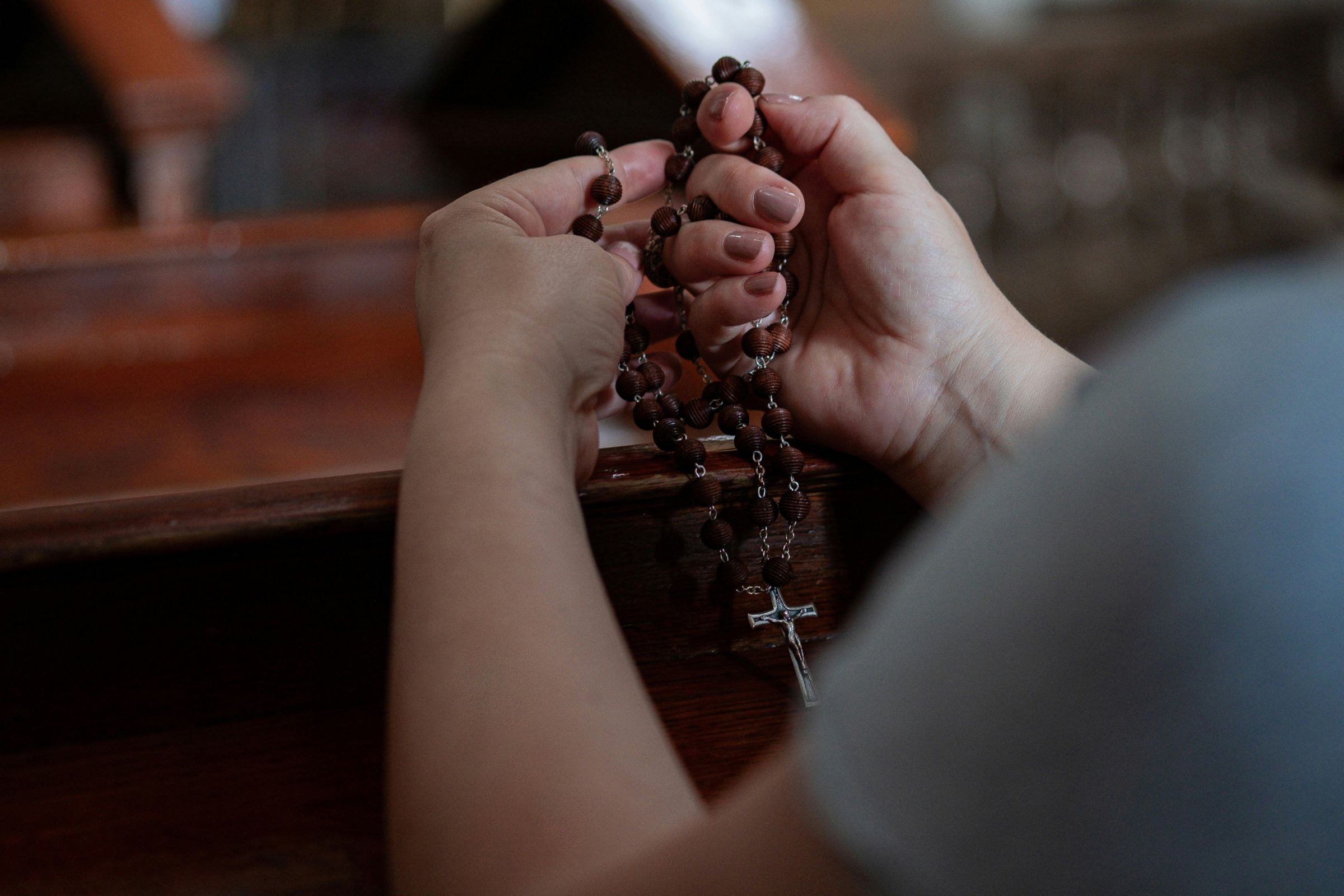
Saturdays are traditionally dedicated to the Blessed Virgin Mary, and the Joyful Mysteries reflect on her life as the Mother of Jesus (these are also prayed on Mondays).
On Thursdays, we remember the Last Supper and the institution of the Eucharist, which is the concluding event of the Luminous Mysteries.
Friday is the day we remember Jesus died for us, and the Sorrowful Mysteries help us meditate on the events of Christ’s Passion (also prayed on Tuesdays).
And of course, on Sunday we remember and celebrate Jesus’ Resurrection, which introduces the Glorious Mysteries (also prayed on Wednesdays).
Of course, you can pray whichever mysteries you’d like on any day—better yet, if you have the time, pray them all!
The mysteries of the Rosary encompass key events in the lives of Jesus and Mary, from the Annunciation to the Resurrection to Mary’s Assumption and Coronation in heaven.
The Joyful Mysteries reflect on the events surrounding Jesus’ birth and childhood. They are traditionally prayed on Mondays and Saturdays. Learn more in our full guide to the Joyful Mysteries.
.jpg)
The Annunciation by Fra Angelico, 1425–1428
The Sorrowful Mysteries center on the events of Jesus’ Passion and Death. These mysteries are traditionally prayed on Tuesdays and, appropriately, Fridays. Learn more in our guide to the Sorrowful Mysteries.
The Glorious Mysteries include the events of Easter and Pentecost, and they are prayed on Wednesdays and Sundays. Learn more in our guide to the Glorious Mysteries.
The Luminous Mysteries, instituted by Pope St. John Paul II in 2002, add more events from the life and ministry of Jesus. These mysteries are traditionally prayed on Thursdays. Learn more in our full guide to the Luminous Mysteries.

Transfiguration by Raphael, circa 1518–1520 (detail)
In this article, we’ve covered the history and mysteries of the Rosary. If you’re ready to learn more, visit our guide to praying the Rosary.
To make the Rosary part of your prayer life, pray along with CatholicTV Monday through Saturday at 10am ET.
Your gift helps CatholicTV deliver the Good News into millions of homes across the nation. We need your support to continue connecting people with Christ and the Church.